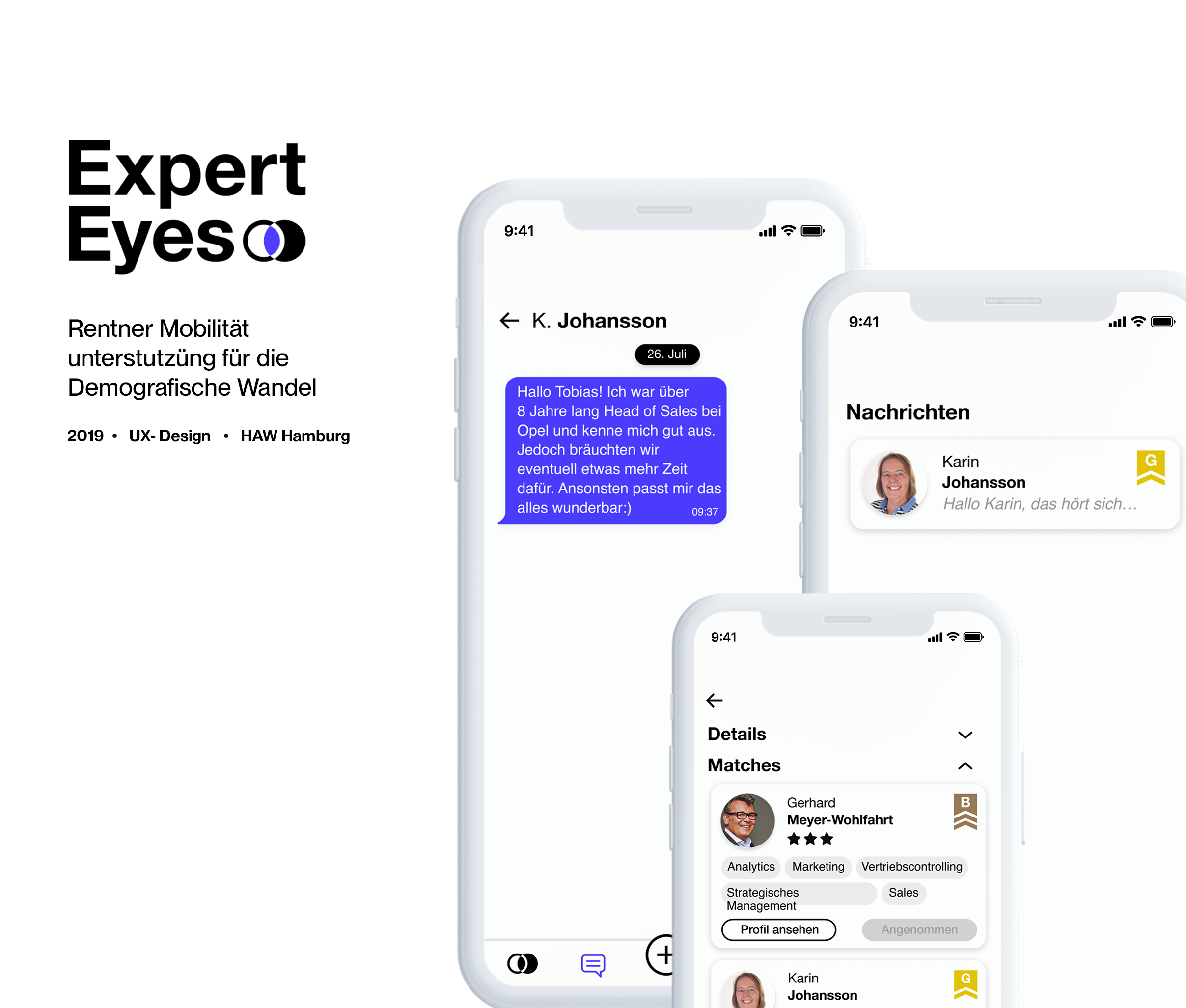
ExpertEyes: How can we design a digital platform that effectively bridges generational gaps by facilitating skill-sharing and knowledge exchange powered by A.I.?
Challenge
What problem did observe?
Germany is approaching a pivotal demographic transition, with over 7 million individuals poised to retire, creating a workforce gap that the younger generation cannot adequately fill. This situation presents two primary challenges: the financial burden on pension systems due to a lack of contributors, and the opportunity for retirees to engage in meaningful activities to sustain their societal connections.
Goal
What did we want to achieve?
This project was part of the “50 Jahren, 50 Ideen” competition hosted by HAW Hamburg, where 50 teams from across Germany competed to create the most innovative project. Each submission had to center on a single theme: Future Mobility. Over the course of six months, we worked on developing a concept to present for judging in August 2019. The winning team would receive funding and professional support to bring their idea to life.
The process
What was our approach?
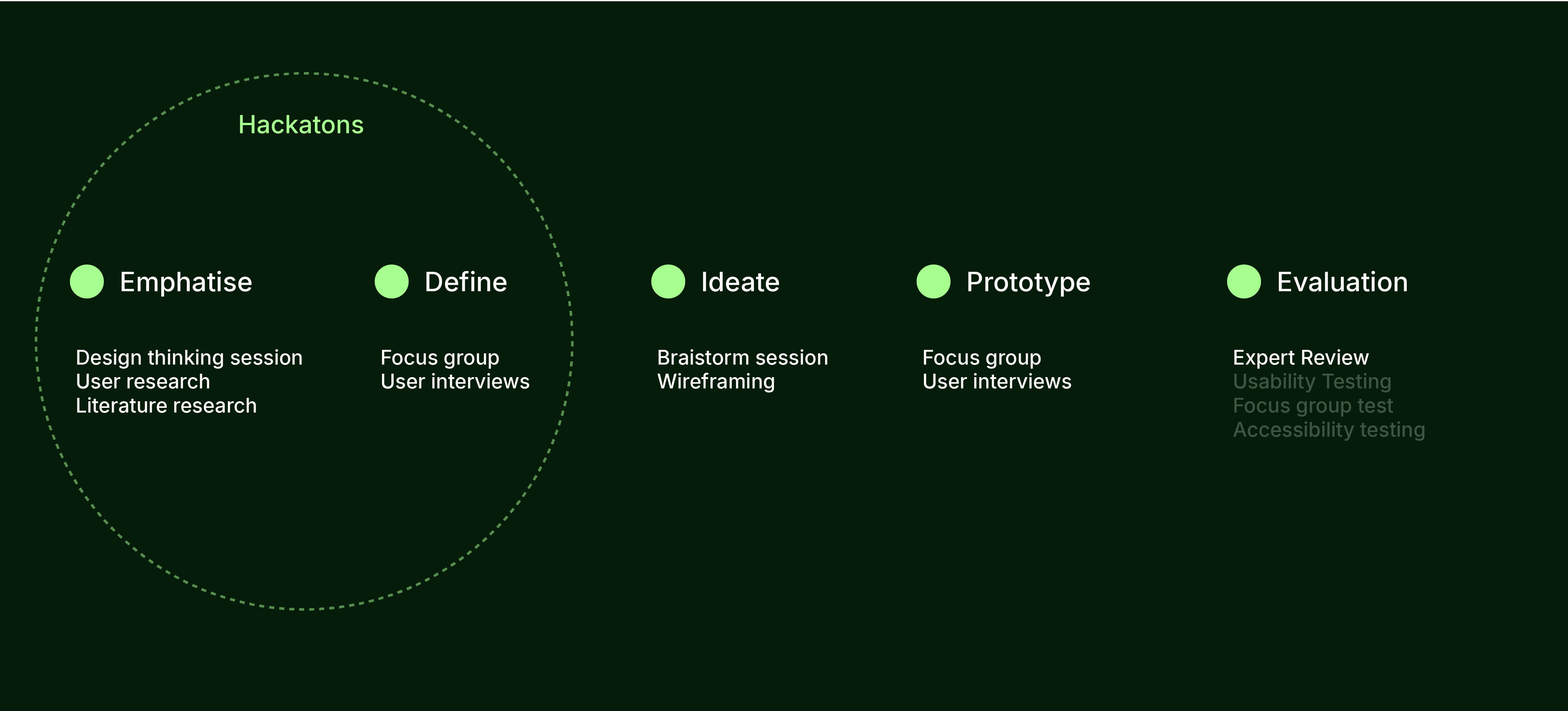
Throughout the project, we adopted the design thinking methodology as our core framework. This approach involved two intensive weekend hackathon sessions, where we focused on the central issue of demographic change in Germany as our main hypothesis.
Consequently, we used this formulation as the foundation for our project, refining it into a clear and actionable design challenge.
Problem definition
Weekend Sessions: Defining the Challenge
The project began with a series of design-thinking weekends, structured like hackathons. During these sessions, we employed diverging and converging techniques to identify problems in our surroundings, research their relevance, and refine them into clearly defined design challenges.
By the end of the first weekend, we had identified the core issue to address: Demographic Change in Germany. This significant shift revealed a range of side effects, including:
- Macro: Germany's pension system is ready for modernization, influenced by external factors shaping its future.
- Poverty: Approximately 17% of pensioners in Germany are at risk of becoming poor
- Staying in touch: A lot of German pensioners still hold a job or want to keep working to not lose social contact.
Define
In-depth exploration of our users
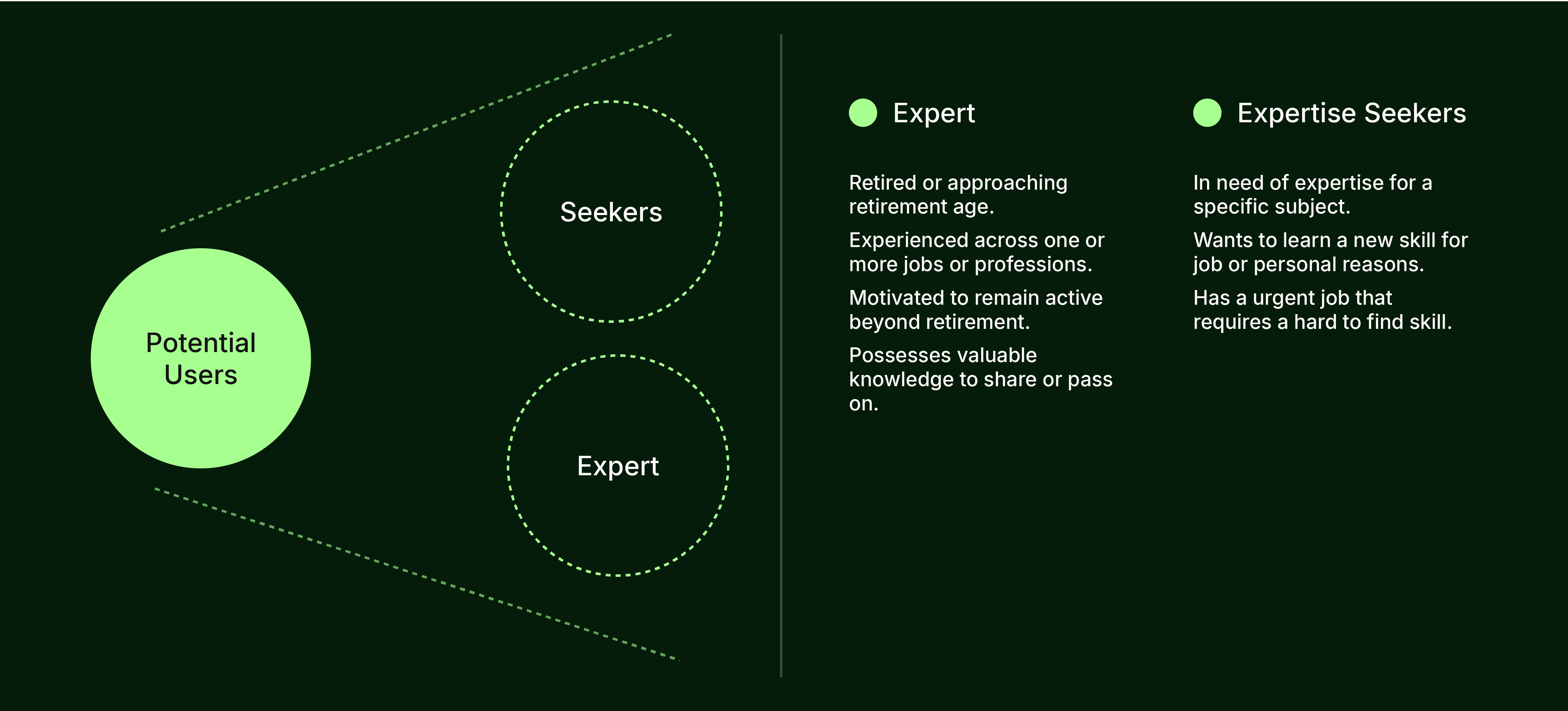
On the second weekend session, we refined our insights from the previous session and conducted a deeper exploration into our potential users. During this session, we developed a series of personas based on extensive literature research and brainstormed strategies to speak with potential users.
We conducted a focus group with an active group of pensioners in Hamburg. During a local meeting, we explored various topics, including how they approach staying active, share their knowledge, and perceive opportunities post-retirement.
Ideate
Establishing the concept
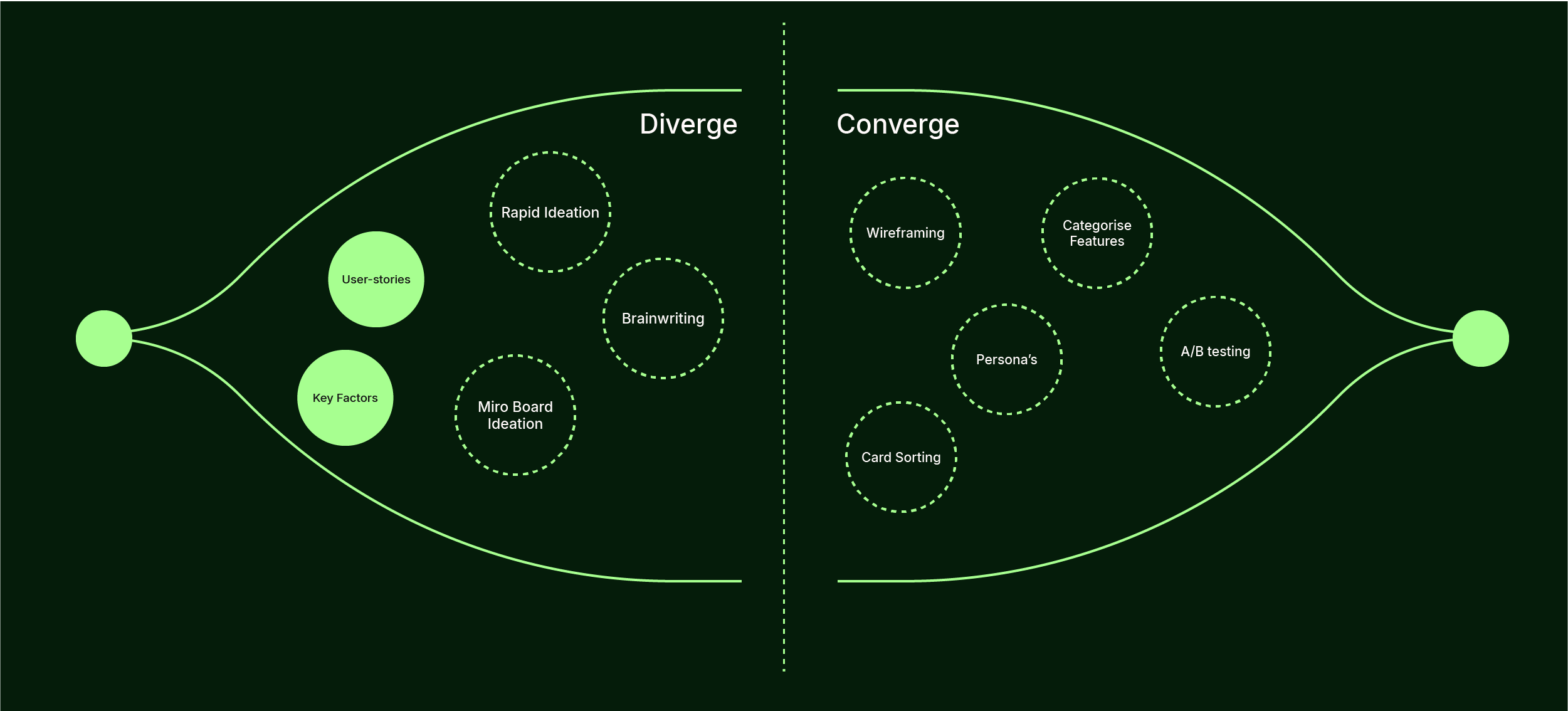
To establish the concept, we organized a brainstorming session using diverging and converging techniques. This session built on insights from the weekend hackathon and the interviews we conducted. Several non-negotiable factors were also identified and incorporated into the brainstorming process:
- Mobile: The concept needed to center around a mobile application.
- A.I.: A level of artificial intelligence had to be integrated into the idea.
Userflow
User journey & A.I. intergration
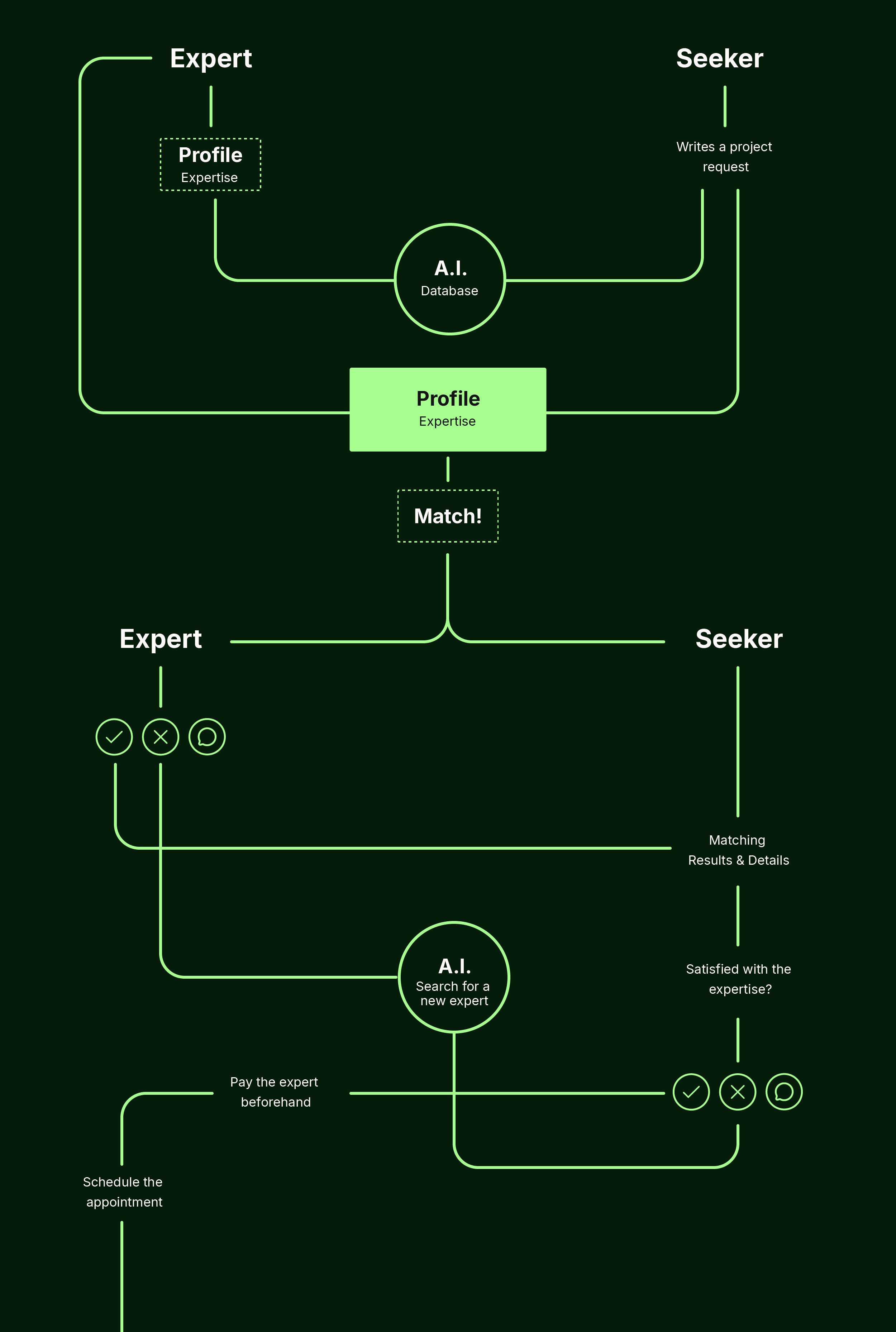
To incorporate a level of A.I. into the app, we chose to implement a database designed to match experts with seekers. This matching process utilizes the meta-data provided by users, ensuring connections are relevant and tailored to their specific inputs.
The result
A mobile skillshare platform
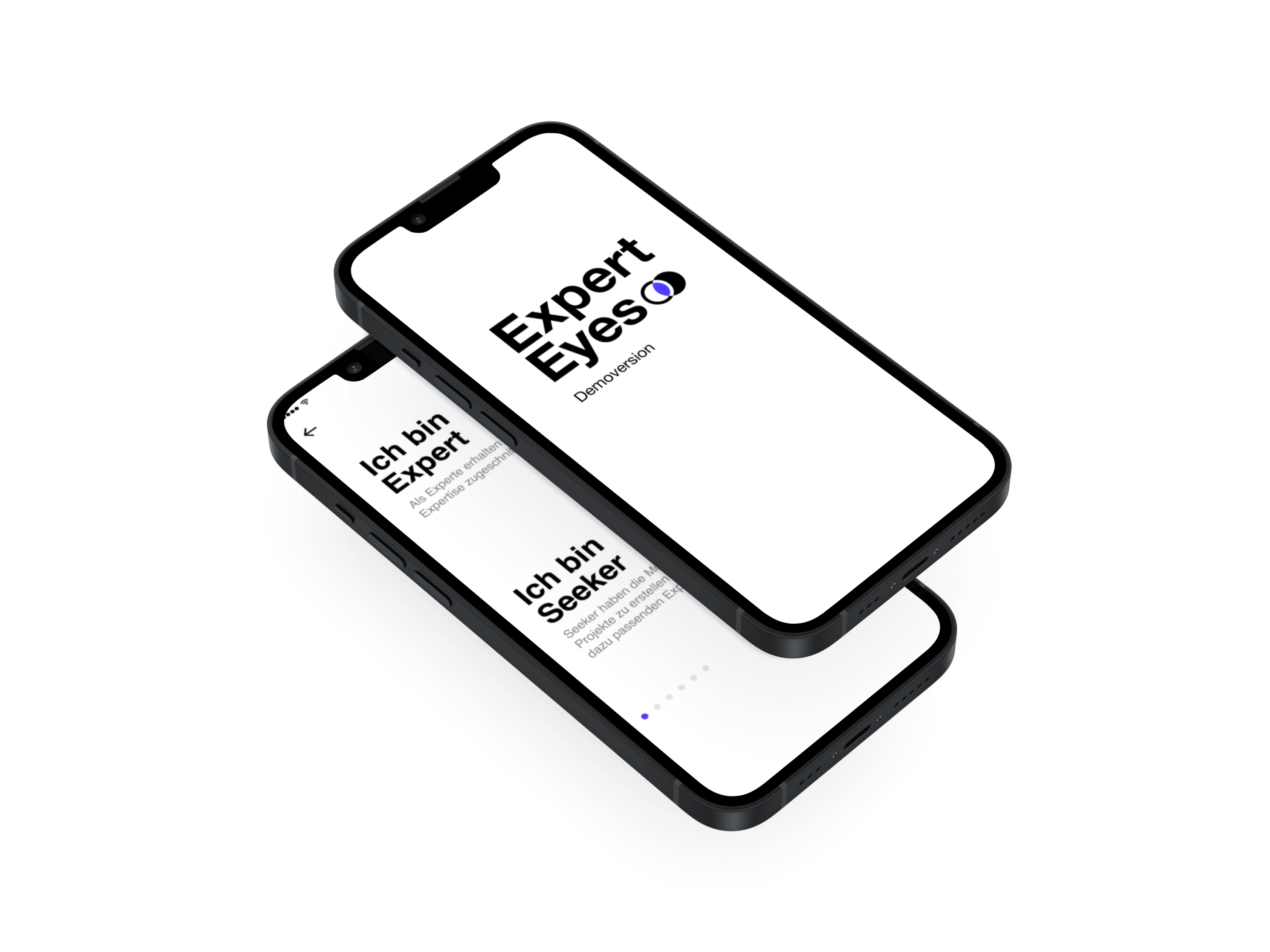
After the ideation phase, we started developing prototypes based on wireframes and started work on a high fidelity prototype, build in Adobe XD. For the competition, we opted for a functional concept that would represent the core concept of the platform, and focus on visual aesthetics if further development would be undertaken.
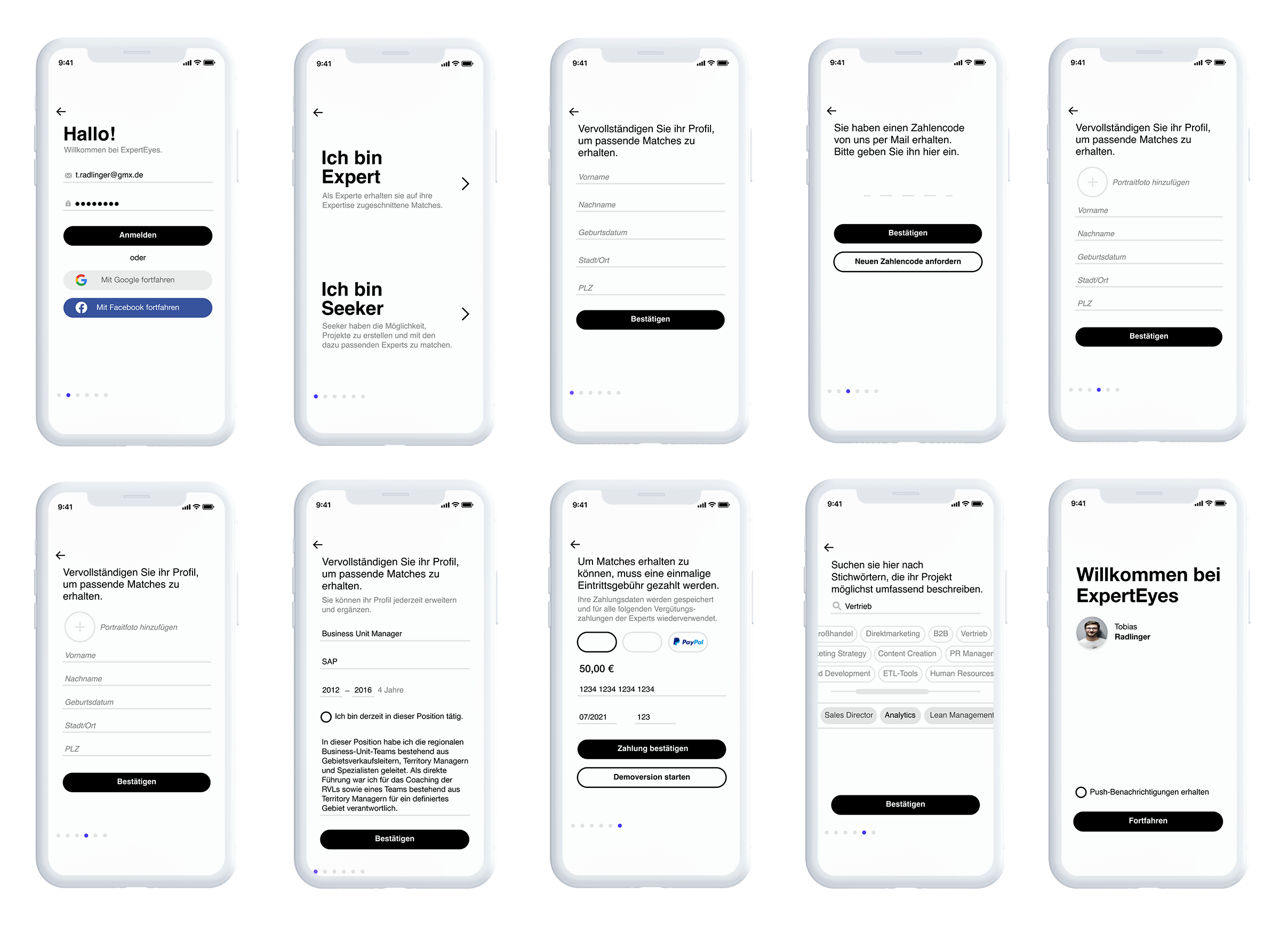
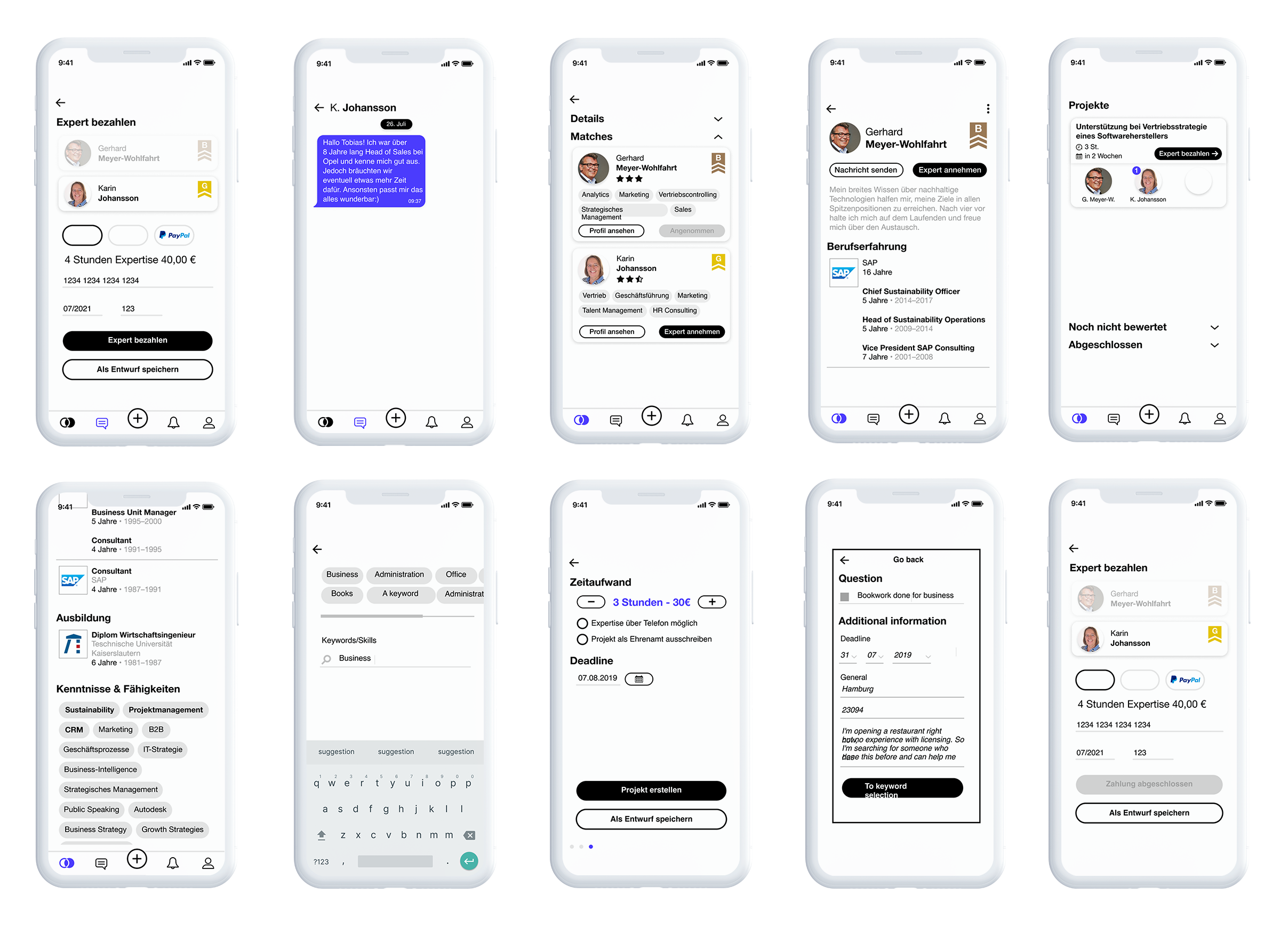
The application concept defined the core user flows, including account creation, matching experts with seekers, and facilitating seamless connections between the two user groups. Seekers can publish a demand for expertise, which the system takes and matches with an expert that posseses this expertise. The seeker will be in contact with the expert and can discuss specific needs and wants for the demand. After agreeing to the details, terms and conditions, a mutual agreement is met and can both parties follow to the execution of the task.
Achievement
Presentation during the Rundgang 2019
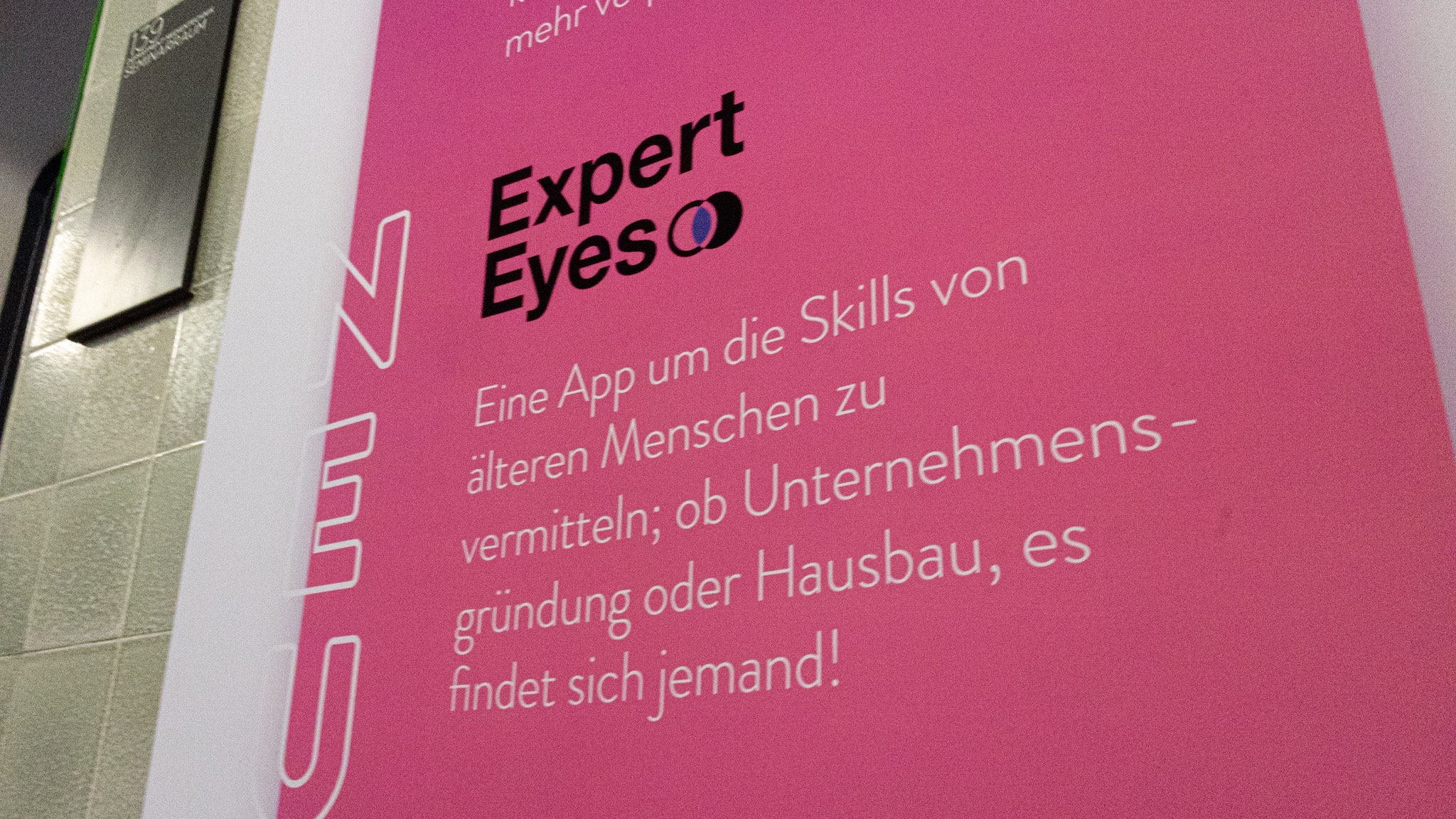
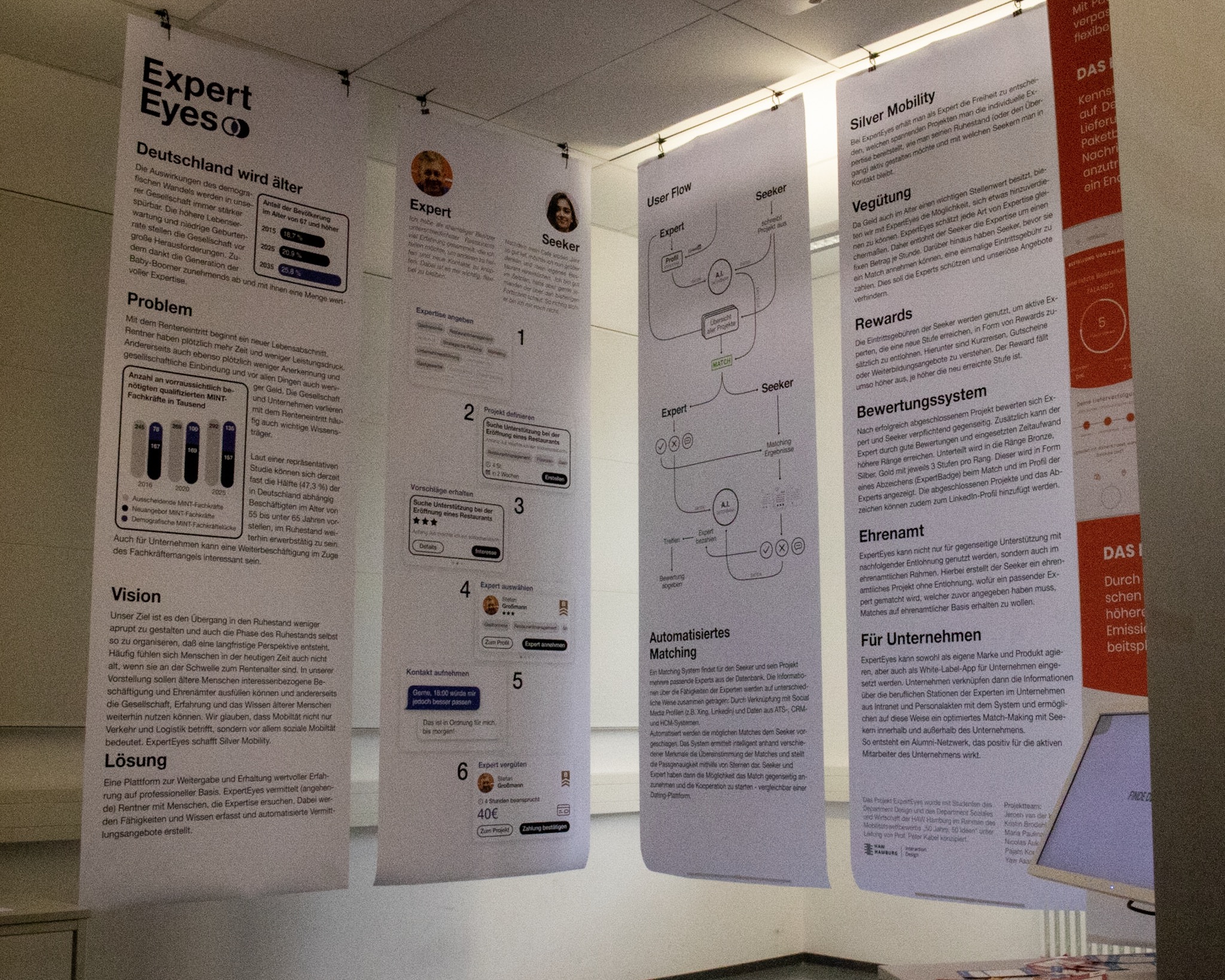
The Rundgang is an annual event at the HAW Hamburg design campus, where students from various disciplines showcase their recent projects. ExpertEyes was proudly featured with large posters outlining the mobile app concept and an interactive prototype available for visitors to explore.
In retrospective
Key takeaways
Looking back, this project was a multifaceted challenge that stretched my abilities as a designer. Collaborating in an international team with diverse disciplines not only tested my adaptability but also provided valuable growth opportunities. Among the key takeaways were:
- Adaptation of Process: While we followed a design-thinking methodology, the steps deviated from the traditional process, requiring flexibility in how we approached each phase.
- Lack of Iteration: Since the project focused on showcasing the potential of an innovative concept rather than proving full functionality, no iterative development cycles were conducted.
- Proof-of-Concept Focus: The primary goal was to develop a proof-of-concept, which meant the testing and evaluation phase was not included within the project's timeline.
- Design Research in a New Context: Conducting research in an unfamiliar environment and tackling an unknown topic in a foreign language exposed me to new cultural trends and perspectives, enriching my understanding and approach to design.
The competition
Nomination
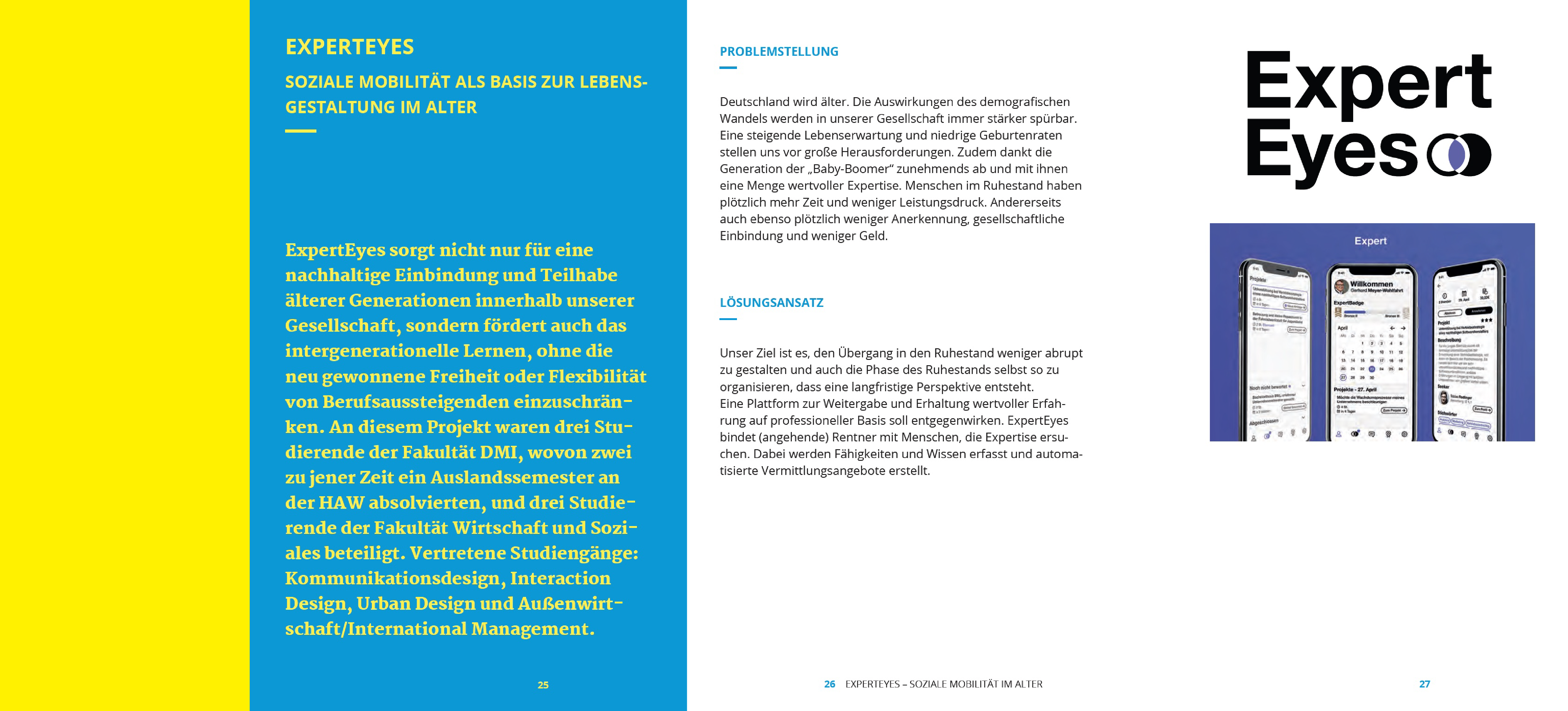
After the summer of 2019, upon my return to Groningen, we received the exciting news that our 'ExpertEyes' idea had been nominated in the competition. This meant we would attend a major event in Hamburg in April 2020, where our team would present the concept to an audience of industry experts and businesses from the field.
Unfortunately, the Covid-19 pandemic led to the event's cancellation, and the presentation never took place in real life but was opted for a digital judge panel to determine the top 3. Later, in September 2019, the results were announced: despite being judged by industry experts, ExpertEyes did not make it into the top three.
Read here about all the ideas of the ’50 Jahren 50 Ideen’ (PDF)
Read more about the ’50 Jahren 50 Ideen’